• Participant registration
  • Official opening of the congress and conference
  • Cocktail reception
  • Luncheon for delegates and accompanying guests
  • Five (5) tour options offered
  • Free evening
  • Luncheon for delegates and accompanying guests
  • Network annual general meeting (AGM)
  • Capital Network annual general meeting (AGM)
  • Workshop
  • Cocktail reception, banquet and entertainment

WEDNESDAY, JUNE 3 - DAY 1

9:00 a.m. to 5:00 p.m.: Registration

Opening of the congress and opening remarks by dignitaries

Details to follow

THURSDAY, JUNE 4 - DAY 2

THURSDAY, JUNE 4 - DAY 2

Bus departures will take place at 8:00 a.m. for tours #3 and #5, and at 9:15 a.m. for tours #1, #2 and #4. Please ensure you verify the departure time for the tour you have selected.

Bus departure from Hôtel Forestel: 9:15 a.m.
Tour in Val-d’Or: approximately 7 km of travel in total
Return to Hôtel Forestel: 5:00 p.m.

Experience innovation

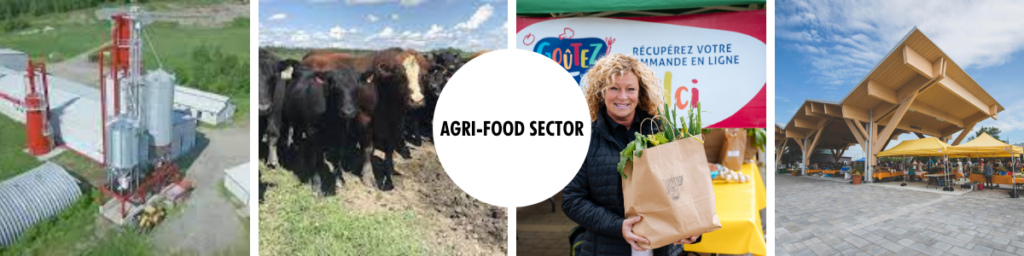
Agriculture and agri-food play a decisive role in the socio-economic development of many regions across Quebec. They shape the landscape, define rural identity, and actively contribute to social cohesion and economic vitality.

The sector is evolving and transforming rapidly. Climate change and its impacts require resilience and adaptation. Consumers are demanding greater transparency regarding the origin of products and the production methods used. At the same time, the rising cost of living forces difficult choices at the grocery store. Aspirations to eat local and organic often collide with limited purchasing power. Added to this are challenges related to recruiting local labour, increasing reliance on foreign workers, and an economic and trade environment that is more volatile than ever.

Nevertheless, the voice of the consumer will resonate well beyond the current uncertainty. More than a trend, food autonomy, local agriculture and environmentally responsible practices are not passing fads. They form the foundation of a food ecosystem that calls for commitment, coherence, vision and sovereignty.

In response to these realities, the region is working to develop innovative and sustainable solutions. This day offers you a fresh perspective and original content, driven by the boldness of local leaders.

From research to practice, from idea to impact, from ambition to tasting, your day will be rich in knowledge, meaningful in purpose, and delightfully surprising.
Bus departure from Hôtel Forestel: 9:15 a.m.
Tour in Val-d’Or: approximately 20 km of travel in total
Return to Hôtel Forestel: 5:00 p.m.

Required attire: long-sleeved shirts without hoods, long pants, closed-toe shoes and hair tied back (for women).

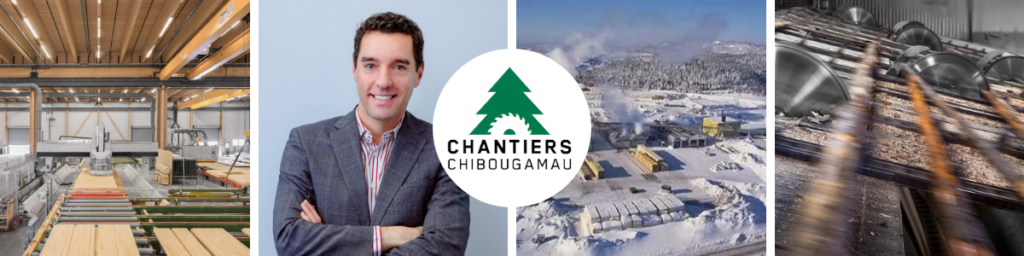
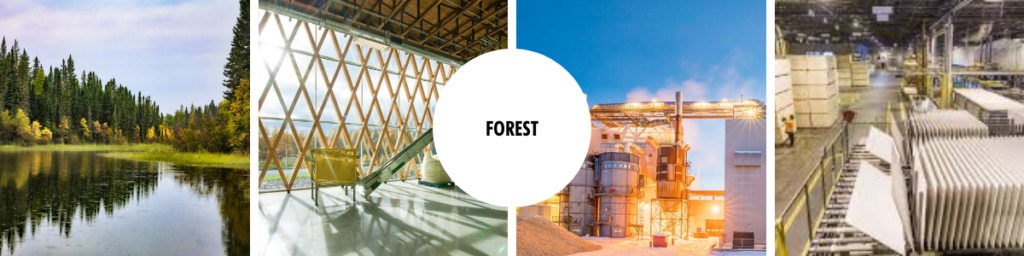
The Abitibi region is renowned for its vast forests, abundant rivers and numerous lakes. These natural resources have long served as a major source of supply, particularly within the forestry sector. While forestry remains a vibrant industry today, it must continually reinvent itself to address the environmental challenges it faces.

For example, wood residues, including large accumulations of bark, may contaminate water bodies that are vital to local communities and other industries. Companies are therefore required to initiate innovative projects to reduce their environmental footprint and prevent discharges into local watersheds.

This workshop offers an opportunity to better understand these challenges and to see, in concrete terms, how the forestry industry is gradually adapting to regulatory requirements and growing social expectations. The valorization of forest residues has become a catalyst for unexpected innovative projects, which you are invited to discover during an industrial site visit followed by presentations on mapping initiatives and innovative projects related to extractives.


Bus departure from Hôtel Forestel: 8:00 a.m.
Tour to Amos: approximately 150 km of travel (round trip)
Return to Hôtel Forestel: 5:15 p.m.

Required attire: closed-toe shoes

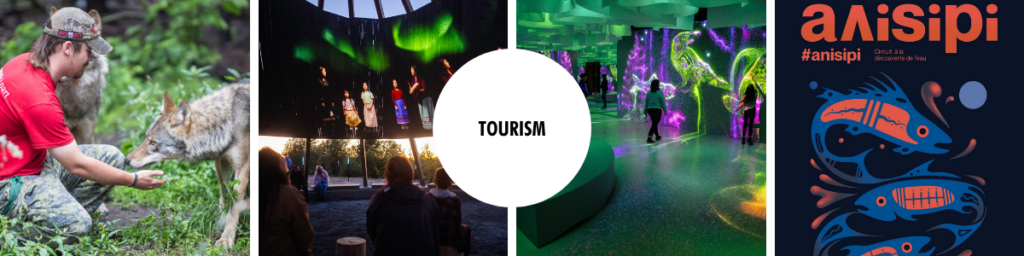
Regions across Quebec compete in ingenuity to attract their share of annual tourism. Abitibi-Témiscamingue is no exception. The region is equally committed to strengthening its position within the province’s tourism landscape, as many of its attractions remain largely unknown to the general public.

As part of a broader attractiveness strategy, the region is highlighting one of its most internationally recognized assets: its water. Renowned as among the purest in the world, Abitibi’s water speaks for itself. The territory is crossed by the six largest eskers in northwestern Quebec. These rare geological formations, remnants of glacial activity, cover more than 4% of the Abitibi RCM. For this reason, the region’s 17 municipalities have launched the Anisipi project, an interpretive route dedicated to the water cycle. Meaning “this pure water that we drink” in the Anicinape language, Anisipi is an initiative designed to attract responsible tourism. It also reflects a genuine and collective commitment to fostering closer relationships among the peoples who share this territory.

During this workshop, you will learn how this initiative was conceived and how it has contributed to enhancing the value of the region’s water resources. Along the route, you will also be introduced to wildlife conservation efforts and to beekeeping. Several engaging business visits are planned.

Bus departure from Hôtel Forestel: 9:15 a.m.
Tour in Val-d’Or: approximately 15 km of travel
Return to Hôtel Forestel: 4:15 p.m.

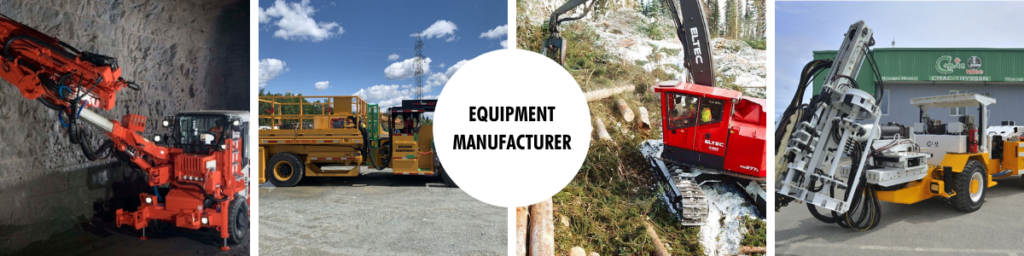
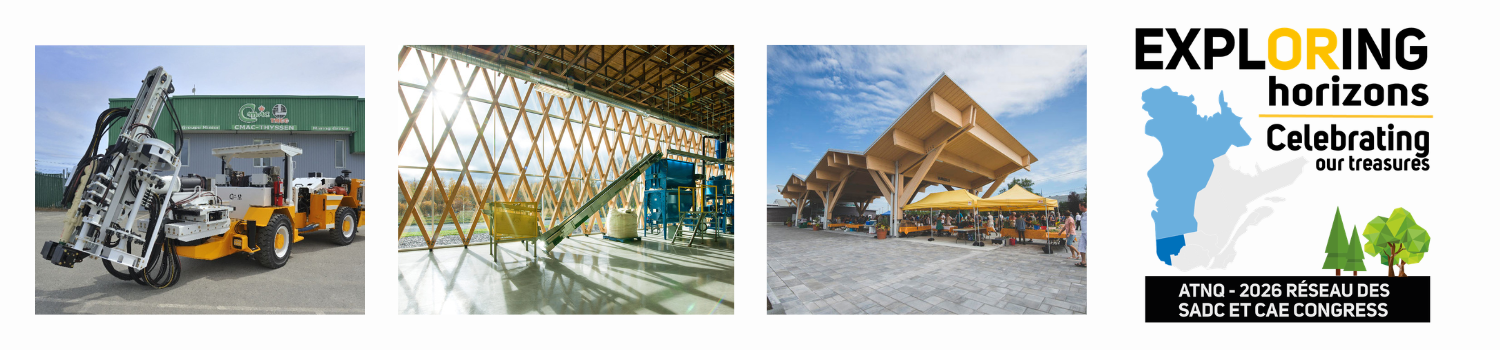
Like many other regions across the country, Abitibi-Témiscamingue actively supports businesses operating in its key sectors of activity, notably mining and forestry. Around these major employers gravitate other companies that have developed highly specialized expertise in these respective fields, providing equipment and technical know-how.

During this workshop, you will visit companies with regional, national and international reach. First, a forestry equipment manufacturer that distributes its products worldwide, having acquired Volvo’s harvester division and relocated production from Korea to Val-d’Or. Machinery manufacturing, precision machining and innovation will be central to the visit.

You will then tour a company operating at more than 15 mining sites across Quebec, British Columbia, Nunavut and beyond. Employing over 850 workers across its projects, the company also operates offices and facilities equipped with state-of-the-art technology.

Curious to discover Abitibi’s expertise in these sectors? We look forward to welcoming you.


Bus departure from Hôtel Forestel: 8:00 a.m.
Tour to Malartic: approximately 80 km of travel in total
Return to Hôtel Forestel: 4:15 p.m.

Required attire: long-sleeved shirts without hoods, long pants, closed-toe shoes and hair tied back (for women).

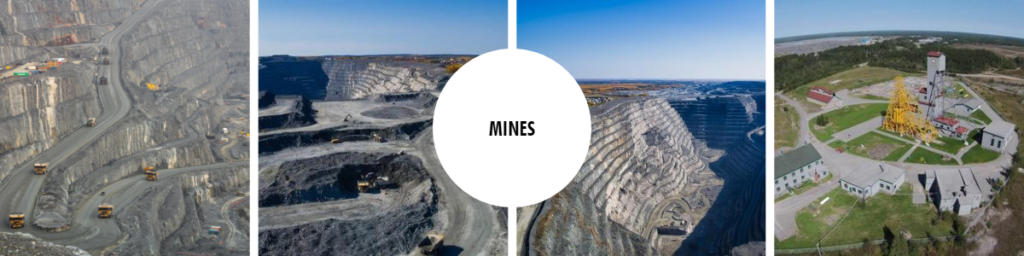
When one thinks of Abitibi-Témiscamingue, mining extraction quickly comes to mind. Images of vast open-pit mines or workers operating hundreds of feet underground are familiar—perhaps somewhat stereotypical, yet reflective of reality. The mining industry remains one of the foundational pillars of the region’s economy.

However, mineral extraction does not come without important considerations. As in other sectors, a balance must be struck between economic activity and environmental stewardship. While earning a livelihood is essential, it must not preclude efforts to protect the environment in which we live. A degree of social acceptability is therefore necessary with respect to mining activities. For long-established projects, this issue may resonate less strongly in public discourse. But what about new developments? Projects today are no longer undertaken as they once were.

During this workshop, you will explore how social acceptability is established within large-scale mining projects—a process that can, of course, be applied to other sectors across the regions. Insightful site visits will provide a deeper understanding of the challenges and realities of this industry.

Thursday evening is free. To view the list of restaurants in Val-d’Or, please click here.

FRIDAY, JUNE 5, - DAY 3

Breakfast on your own starting at 6:00 a.m

The bus will depart from Hôtel Forestel at 7:45 a.m. and travel to the Université du Québec en Abitibi-Témiscamingue (UQAT). The bus will make two round trips to transport all congress participants.

Registration for the annual general meetings will take place between 8:00 a.m. and 8:30 a.m. at the SUM – Multifunctional Room, Pavillon des Premiers-Peuples, UQAT (2nd floor).

Détails to follow

The Friday gala evening will be held under the theme “Personnes en or.” You are invited to wear attire and/or accessories in black and gold.

6:00 p.m.: Cocktail reception in the lobby of Hôtel Forestel. Tasting samples from Distillerie Alpha-Tango and Microbrasserie Le Prospecteur will be offered.

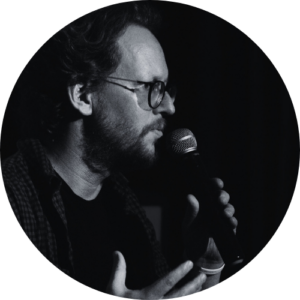
The evening’s master of ceremonies will be Paul-Antoine Martel.

Paul-Antoine-Martel

Originally from La Tuque and a proud resident of Val-d’Or, Paul-Antoine Martel holds degrees in literature, film studies and journalism. After completing his studies in Montréal, he returned to Val-d’Or, where he has served for more than 20 years as liaison and community relations officer for the City of Val-d’Or. Deeply committed to his community, he places his passion for regional history and culture at the heart of his initiatives, notably through La vraie virée valdorienne.

An experienced improviser, host and co-host of the independent program Quand pensez-vous?, he demonstrates remarkable ease and dynamism with words. Highly engaged in the cultural sector, he has contributed to several major regional events and was awarded the Prix Jeanne-Lalancette-Bigué in recognition of his dedication. Creative, unifying and a proud ambassador of Abitibi-Témiscamingue, he is the ideal host for this evening.

7:00 p.m.: Banquet and show – A five-course meal featuring a variety of regional products will be served.

ANY QUESTIONS ? CONTACT US

JEANNE CÔTÉ-DUMAIS

MARIE-PIER BÉDARD